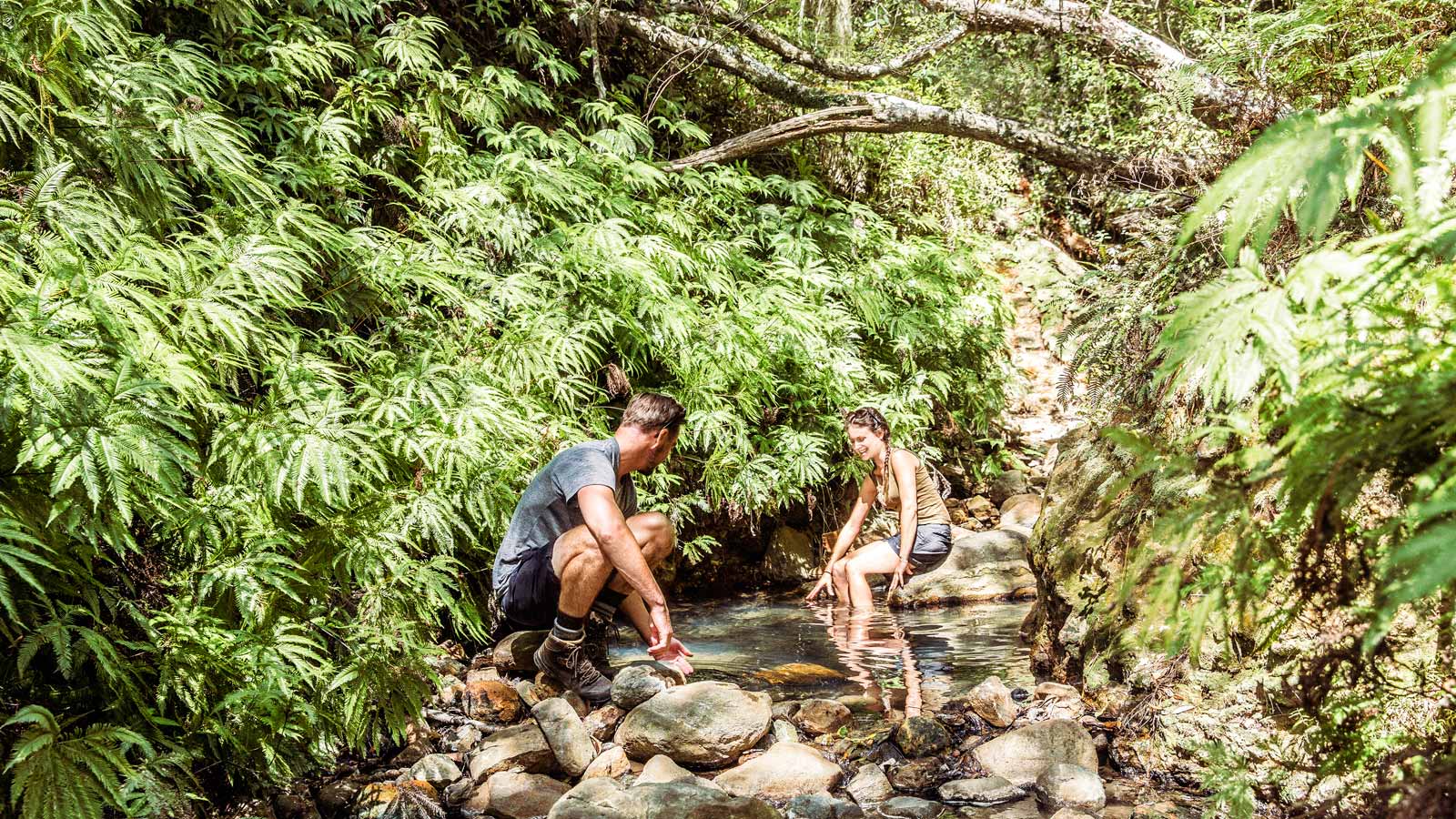
With New Zealand a country known the world over for its spectacular natural heritage and assets, your clients may already have considerable expectations of a natural New Zealand experience. But even the highest of expectations are rarely disappointed by New Zealand’s wilderness areas and their remarkable majesty and considerable diversity, as well as the recreation and scenic opportunities offered by its great outdoors lifestyle.
Remarkable Landscapes
In the archipelago of New Zealand, soaring mountains, volcanic moonscapes or aquamarine lakes fed by glaciers can be discovered in close proximity to temperate rainforests and surf beaches thundering against a backdrop of rolling hills.
New Zealand’s range of landscapes makes it extremely popular with film location scouts and for visitors, New Zealand’s natural diversity means strolling along a sandy beach in the morning, stopping at a sun-drenched winery for lunch and hiking along a wild alpine trail in the afternoon.
Alpine Areas
The Southern Alps are the mountainous backbone of the South Island.
The Southern Alps rise over 3,000 metres and are lorded over by New Zealand’s highest peak – Aoraki Mount Cook. The Mackenzie Basin and Central Otago are unforgettable regions amongst the mountains and home to some very popular visitor destinations offering outdoor activities such as climbing, horse trekking and flight-seeing in a ruggedly beautiful landscape. In the central North Island is a high-altitude plateau overlooked by a triad of volcanoes. Two of them, Mount Ruapehu and Mount Ngauruhoe, stood in as ‘Mount Doom’ in The Lord of the Rings, and the former is home to the North Island’s most popular ski resort. Most New Zealand ski areas, however, are in the South Island.
Geothermal Features
Bathing in a hot mineral pool is a popular way to experience geothermal activity!
New Zealand’s landscapes have been shaped by powerful geothermal forces. The sparkling waters of Australasia’s largest lake, Lake Taupo, for example, are popular for boating, fishing and swimming in summer, but these tranquil pastimes belie the violence of the lake’s history – Lake Taupo owes its existence to a massive volcanic eruption long-ago. These days, the region stretching from Lake Taupo to Rotorua is popular with visitors wanting to catch a glimpse of geothermal features including bubbling mud pools, hot waterfalls and geysers, as well as soothing thermal pools at a number of spa complexes.
Beaches, Coasts & Islands
Boating is a New Zealand tradition and a great way to explore coastal areas.
Nowhere in New Zealand is very far from the sea and the coastline ranges from golden-sand beaches to rugged coastlines rimmed with slate-grey cliffs and crashing surf. In summer, the beaches of Northland, The Coromandel, Bay of Plenty and Nelson are great for swimming, while the regions’ offshore islands make for idyllic getaways. Visitors who enjoy boating will find paradise in the Bay of Islands, in Auckland’s Hauraki Gulf, and in the Marlborough Sounds.
Caves
New Zealand’s most famous cave system is at Waitomo in the western North Island.
Underneath rolling hills in Waitomo lies a spectacular limestone labyrinth of underground rivers, sinkholes, caves and rock formations, a caver’s paradise studded with glow-worms. Visitors can explore the caves on abseiling, caving and black-water rafting expeditions. The South Island also features expansive cave systems, from the Marble Mountains near Nelson to limestone caverns in Fiordland – many are accessible via guided tours.
Glaciers
Fox and Franz Josef are two of the world’s most accessible temperate-zone glaciers.
South Westland, along the South Island’s western coastline, is home to two very special glaciers. Fox and Franz Josef Glaciers are two of the most accessible in the world. The blue-white rivers of ice seemingly defy the rules of nature, snaking down through a dark green temperate rainforest just 300 metres above sea level! Visitors can walk to the glaciers or join a guided glacier hike or climb to see them up close or even clamber over them! There are other glaciers further inland at Aoraki Mount Cook National Park. A flight-seeing expedition is an excellent way to see them. Another great experience is a glacier lake cruise.
Experiencing Natural New Zealand
The wonderful thing about this part of the world is that there are so many exciting activities to experience against a backdrop of stunning natural landscapes.
4WD Adventures An especially thrilling way to see New Zealand’s landscapes is by 4WD. Quad bikes and 4WD vehicles are a popular option to get off the beaten track. Explore the river beds of Glacier Country or cruise along beaches of the North Island. There are places where visitors can step it up a notch and book an experience in an all-terrain military Hagglund, cut through bush and conquer steep inclines, while in Rotorua they can choose from bush safaris, thrill rides and raceline karting.
Boating With a coastline 15,000 kilometres long, and dozens of lakes, there are plenty of opportunities to experience New Zealand from the deck of a boat. Take a cruise across Lake Wakatipu in Queenstown to see a New Zealand high-country station, or a glacier lake tour in Aoraki Mount Cook National Park. In Fiordland, visitors can drift past pristine waterfalls and spend the night on board in a private cabin. Book a sailing adventure around the Bay of Islands, the Hauraki Gulf or the Marlborough Sounds, or suggest a laid-back dinner cruise. Combine boating with fishing, diving, swimming with dolphins or whale watching, or go island-hopping to find pristine beaches. Ferries are an economical option.
Cycling Guided cycling tours, on- or off-road, are increasingly popular – winery tours by bicycle are especially so! The Otago Central Rail Trail is a 150-kilometre cycling adventure through the rugged backcountry of Central Otago, passing relics of gold-mining history. Another excellent trail is the beautiful Queen Charlotte Track in coastal Marlborough, which is open to mountain bikers for most of the year. The trails around Rotorua are highly regarded, as are trails near Wanaka, Queenstown and Christchurch. Mountain bikes may be rented in New Zealand’s main centres or popular destinations.
Diving New Zealand’s location at a meeting point of arctic and tropical currents means a diversity of species. Combined with clear water, this makes New Zealand a popular dive location. The Poor Knights Islands Marine Reserve off Northland is renowned for its mix of species, and in the Cavalli Islands, the Greenpeace wreck Rainbow Warrior has been used as an artificial reef. The Marlborough Sounds and Kaikoura offer great dives, while Fiordland is home to the world’s largest population of Black Coral trees, some 200 years old. For beginners, instruction and certification programmes are available, while experienced divers should bring their Diver’s Certification Card. www.divenewzealand.co.nz
Flight-seeing Flight-seeing can offer a very different view of New Zealand, whether you’re flying over an active offshore volcano or whale watching off the coast of Kaikoura. Fiordland is a great region for taking a scenic flight – towering peaks take on new dimensions from the air – but opportunities for flight-seeing in helicopters, fixed-wing planes or even hot air balloons are available all over the country.
Kayaking and Canoeing Kayaking with seals is popular off the Kaikoura coast, and these playful mammals are often encountered in other parts of the country too. Even dolphins and whales may come for a closer look at kayaking humans! In Abel Tasman National Park, visitors can enjoy the experience of paddling around the pretty coastline by day and spending the night camping on a sandy beach. Canoeing expeditions are popular on larger rivers, such as the Whanganui River, where they are a supremely tranquil way of exploring a beautiful rainforest.
Photography Courses A different approach to experiencing nature is to enrol for a photography course – classes are on offer in all major centres. Observing nature through the lens brings out detail that might otherwise be missed, whether you zoom in on the stunning contrast created by the Pukeko’s red beak and cobalt plumage or take a panoramic shot of Auckland’s waterfront at dusk.
Wilderness Retreats From camping on a beach to spending the night in an alpine hut on an overnight hike, there are a number of accommodation options in the great outdoors – but perhaps most surprising are the luxurious retreats that are hidden away in some of the most remote corners of New Zealand. Taking the form of lodges, resorts or private houses, they combine a stunning natural setting with the highest standard of accommodation, activities suited to the region (from fishing to horse riding), fine local cuisine expertly prepared and the personal attention of friendly hosts to create a wonderfully tranquil retreat from everyday life.
Tangata Whenua – People of the Land
In Maori tradition, features of the landscape such as mountains, lakes and geothermal areas are personified and incorporated into legend, creating a cultural history in which people and the land are intermingled.
Unforgettable Sights
- The Bay of Islands Island-studded maritime playground in the subtropical Northland region.
- White Island Steaming offshore volcano in the Bay of Plenty.
- Waitomo Caves Underground rivers and caverns studded with sparkling glow-worms.
- Rotorua Mud Pools Evidence of the earth’s powerful defining forces.
- Lake Taupo & Huka Falls Massive waterfalls and New Zealand’s largest lake.
- Central North Island Volcanoes Mt Ruapehu, Mt Tongariro and Mt Ngauruhoe.
- Marlborough Sounds Bush-clad hills shelter quiet coves in these drowned valleys.
- Abel Tasman National Park Coastal paradise of golden beaches, green forest and blue water.
- Punakaiki Pancake Rocks Coastal rock formations and dramatic tidal blow-holes.
- Fox & Franz Josef Glaciers Rivers of ice snaking through rainforest.
- Mackenzie Basin Lakes Glacial deposits turn these lakes aquamarine.
- Aoraki Mount Cook New Zealand’s highest peak stands 3,754 metres tall.
- Fiordland Magical deep fiords surrounded by cliffs, waterfalls and lush rainforest.